Featured

Six-Word Memoirs

Six-Word Memoir

A project run by Smith Magazine, where people are asked to convey their lives or a message in six words. No more, no less.

Problem solving leads to more problems.

— January 23, 2020.

This post will be a collection of the six-word memoirs I come up with. I thought it was to hard to make up just one and stick with it, so I decided to make a collection of all the memoirs think of and record the date I came up with them.

Featured

Me, Myself, and I

This is a post to tell you a little about myself and why I am choosing to pay our college overlords.

So I guess a good place to start is where I’m from: Carrollton, Texas. I lived there for 18 years before coming to OSU to major in mechanical and aerospace engineering. Now I’m in my sophomore year and couldn’t be anymore impatient about graduating.

A few miscellaneous facts about me…

  • I am the youngest of three boys by 10 years
  • I have two nieces named Tori (8 years) and Billie (1 year)
  • I enjoy making things with my hands, most recently I’ve been getting into woodworking
  • I love dogs and tolerate cats
  • I like being outdoors and admiring nature
My two adorable nieces

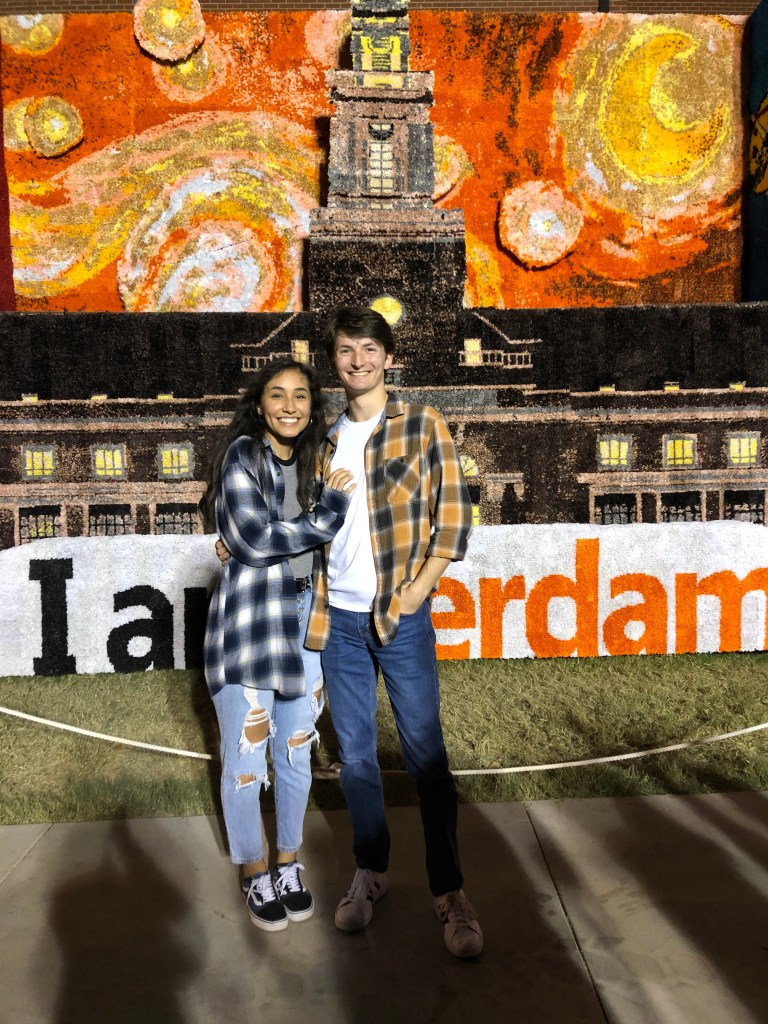
There’s not too much else that is mind blowing about me. The only other outstanding thing I can think of is my best friend in the whole world. The person who I never get bored of and the person I fell in love with. My girlfriend, Sofia, who I have been happily dating for almost a year. The best part is, she’s just as weird and nerdy as I am.

The One, The Only, The Marvelous Sofia Gomez

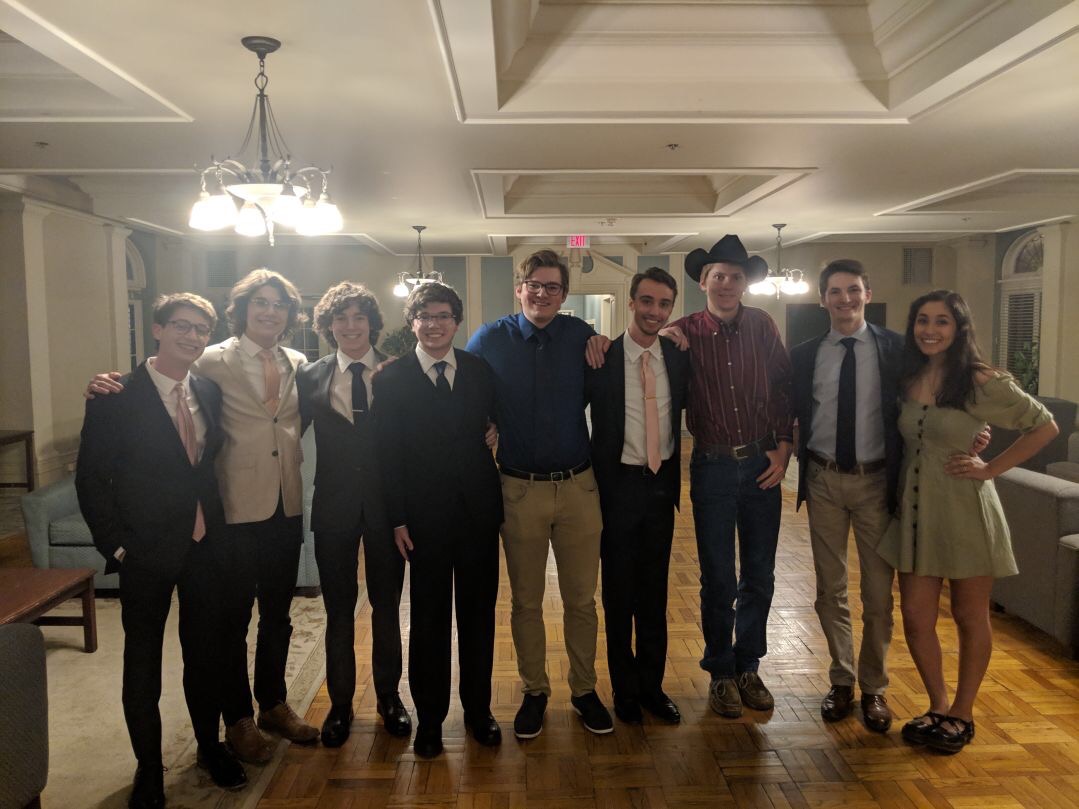
The next mad geniuses I would like to recognize are my friends who live with me. They are all smart, funny, and exciting people to be with. We regularly make midnight runs to Walmart or Whataburger just to make our lives harder.

That’s about all there is to me. I’m an open book for the most part.

This is goodbye?

Big Bang Conceptual Artwork Photograph by David Parker

I would choose David Parker’s interpretation of the big bang. No-one quite knows how the big bang looked but I love how he thinks it looks. It’s full of color and energy of every kind. Kind of like how flash fiction can be used for any and all genres and topics. Also, like the universe, flash fiction is constantly growing and evolving. Plus I think this pisture is really pretty and eye capturing.

This is it. We’re done, and hopefully Oklahoma State will be up and running next year. This is Weston Taylor, officially retiring WT’s Blog. Thank you for the wonderful year and stay safe everyone.

Citation

Parker, David. “Big Bang Conceptual Artwork by David Parker.” Fine Art America, 2016,
fineartamerica.com/featured/big-bang-conceptual-artwork-david-parker.html.

BP7: Four Hard Facts About Dihydrogen-Monoxide

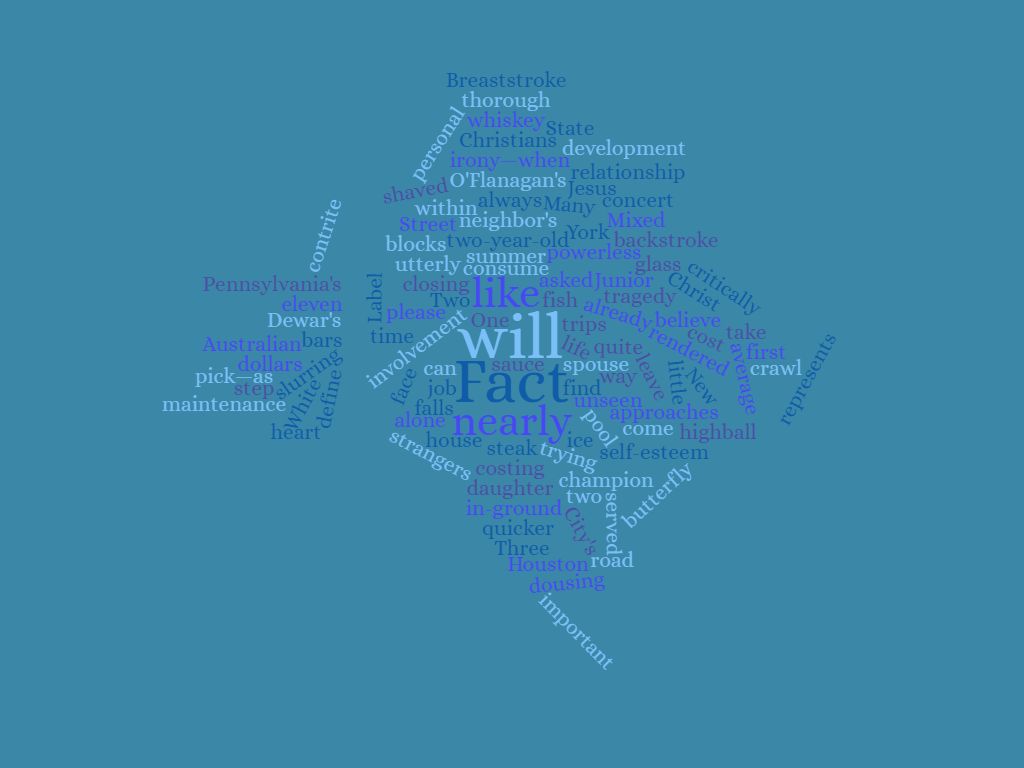
I want to start with the limitations or problems I ran into. I would like to note, I purposefully made everything close to blue to represent the recurring water theme. I hoped this would help draw some connections to the original story and its title, “Four Hard Facts About Water.” I wish I had found a water droplet shape to further emphasize this, but they did not include one in their options. So I decided to stick with the random mass it generated rather than do a specific shape because the original flash is random facts that turn into one dark underlying story. For instance, I could have done a person because this story is told by a father who lost a daughter, but I thought it would’ve subtracted from the picture as a whole.

Now to analyze the actual word cloud. The two biggest words are, “Fact,” and, “Will.” The reason they are the biggest is because they are used more often, Illustrating how the author wrote definite solutions. They did not write maybe or kind of. They wrote will and fact, which are hard truths and reality. Which as we can see at the end of the flash, is what we see. The hard facts, the brutal truths, the harsh reality. The next two biggest words were the opposite of definitive. “Like,” and, “Nearly,” are the opposite of will and fact, and bring about a contrast to the hard facts. The author begins most of his sentences as so, they begin with an uncertainty – I nearly – and end with a certainty – will lead to. This is how the author emphasizes their helplessness and the brutality of reality.

BP6: Bird is the Word

“And ten thousand birds, they cannot be caged.”

The quote, “And ten thousand birds, they cannot be caged,” is from Alex McElroy’s “A Man and A Man”. It is towards the end of the two men’s conversation about the sad man’s wife. It was the celebrity’s metaphor to explain how she is a woman who won’t settle down, who won’t give up her freedom, who is bound to leave him. This image relates to that metaphor in two ways. The first being the obvious illustration for the cage metaphor. Second, the image representing the woman or “ten thousand birds,” breaking free. Someone could say, well you don’t know that birds were in there. Well Mr./Mrs. Smarty-pants, you can assume there were birds because it’s a bird cage, and one that wouldn’t fit ten thousand birds. I feel the reason the author used ten thousand is because that’s about the size you would see when they are the huge clouds off the side of the roads. The big clouds of birds that move as one. Ten thousand is also a good number to illustrate a size that cannot be contained by normal means. Also this image shows the birds already gone. As for the juxtaposition of the text and image, I would say that they are related as a sentence and illustration of the same idea/metaphor.

Works Cited

Berti, Fabio. “Broken Bird Cage, the Concept of Escape.” 123RF, 2020,
http://www.123rf.com/photo_11087446_broken-bird-cage-the-concept-of-escape.html.

BP5: Why Do Men Aspire To Be Statues?

As Joe Erhmann said in his TEDTalk, “Be A Man,” the words , be a man, impacts a boy’s life more than we realize. I can think of at least one time when I was told to stop crying or to man up by a male role model in my life. Now I don’t believe it was their intent to make me not display emotion at all, just that there are appropriate times to be emotional. However, the appropriate times to display emotions was never really shown; I was just told when to not show emotion. 

For instance, my grandfather on my dad’s side passed away when I was around the age of 12. When we held his funeral, my grandmother, father, mother, and two brothers sat on the same row as me, in that order. My mother and grandmother were constantly wiping their eyes with tissues. Meanwhile, my father and my brothers sat there silent. None of them shed a single tear or sniffle, almost as if they were statues. I was bawling most of the service. What would you expect from a twelve year old who went to bed with a grandfather, then woke up the next day to be told he no longer has a grandfather? My brothers still sat there, stone faced. My father was trying to silence me, not in the, “real men don’t cry way,” rather he just gave me handfuls of tissues and my mother had to take me out to the bathroom. Later on was when the, “be a man,” logic came. My brothers were out on the patio at home and I still had a runny nose from crying. My brothers poked fun at me for crying and sounding like a baby. This may not seem like much, but over a lifetime this can change someone. 

In fact, things were different around 6 years later, when my grandmother on my dad’s side passed away. During the funeral, I couldn’t shed a tear for the longest time. It wasn’t until I went for my orientation for OSU a few weeks later when it hit me. I had gotten to know some really cool people and we started talking about stuff. I don’t remember how it got brought up, but I started talking about how it was nice to just take my mind off of my late grandmother for a while and I was thankful for meeting them. Then, without me even thinking about it, my eyes started getting watery, I felt a lump in my throat, and I tried to finish my sentence but I choked on my words. The choke turned into sniffling and I was so close to losing it. Then the man who had been leading our group stood out of his chair and hugged me. He said, “I couldn’t even tell, none of us could. You were strong man,” and at that moment it just all flooded out of me. That was the first time I cried in a while. I know he didn’t mean for it to come across this way, but he was equating me holding back my feelings to being strong. Another prime example of someone unintentionally building the idea of a strong male being emotionless. 

Both of these moments are prime examples of how people accidentally reinforce the male emotionless figure that Joe Erhmann mentions. Even though they meant well, moments like these subtly reinforce the idea in young mens mind’s that emotions are not to be expressed in front of others.

Works Cited

Erhmann, Joe. “Be A Man: Joe Ehrmann at TEDxBaltimore 2013.” TED, 20 Feb. 2013,
https://www.youtube.com/watch?v=jVI1Xutc_Ws.

BP4: Life in High School Before The “After”

This post will focus on a specific portion of Bill Konigsberg’s “After”. As stated in the title, it will be mainly about the school and friend portion of this story. The best place to start is why “After” is told from a second-person point of view. The reason being, the author can put the reader in the shoes of their character. In this case, the author puts us in a gay 16 year old in high school. Throughout the story, we, the reader, are put through the same bullying, discrimination, and insecurity that the character is. 

The second-person point of view is enhanced by Konigsberg illustrating emotions through sentence length rather than telling us what we feel. Naturally, when someone feels sentimental or strongly about something, they tend to elongate their sentences or thoughts. But, when someone dislikes something or is aggravated by it, they have shorter, more sporadic sentences or thoughts. The reverse is also true. By making sentences longer or shorter an author can strategically manipulate the emotion of a piece without directly stating it. This helps to translate the anger, frustration, and pain that the author is trying to convey.

Konigsberg also vividly describes the methods used by the character’s peers to harass him, as well as how the character reacts. The best example would be, “when they pushed your head into the side of the table, you thought maybe it would puncture, leave a scar. They were smarter than that. Both times, they only left marks under your clothes.” Those lines are a small selection of what Konigsberg uses throughout the story. I was able to imagine the banging of my head and the group of bullies around me when I read that.

The vivid imagery and illustrations of emotion via sentence length work beautifully with a second-person narrative, creating the experience of the reader being bullied, lonely, and unable to ask anyone for help. More specifically, the techniques allow Konigsberg to add his view on “how bullying can affect a LGBT youth” by vividly describing bullying events and putting you in the teen’s mind with a second-person point of view and indirectly provoking emotion with sentence length. 

Works Cited

Konigsberg, Bill. “After.” Sudden Flash Youth, edited by Christine
Perkins-Hazuka, Tom Hazuka, and Mark Budman, Persea, 2011, 30-
32.

BP3: A Deeper Look at “Karintha”

When I first read through the excerpt from Laura Doyle’s Bordering on the Body: The Racial Matrix of Modern Fiction and Culture, the line, “Karintha’s body absorbs light and value without, as it absorbs the gaze and intentions of the men who desire her,” from the first paragraph stood out to me. I had never thought of the sun metaphor as meaning more than describing how she looks physically. Doyle takes it a step further, comparing it to the gaze of men. I wholeheartedly agree with this idea, but it got me thinking. Could the line, “‘like dusk on the eastern horizon’,” be stretched any further? Would it be accurate to compare it to how the sun never sets on her? Meaning her beauty was ageless or was never ending, since the day never ended for her. That could be another such derivation of that line. 

The next line that caught my eye was when Doyle said “seesaw of competition,” referring to old and young men competing for her. I don’t agree with this opinion. In fact, I think the illustration of different ages being interested in her showed how her beauty transcended age. Doyle made it seem like she interpreted it as old men versus young men, when I think it is actually every man for himself. Doyle believes that the old versus the young is what caused her to “ripen” too soon. Instead, I believe it’s just the attention from all males, again, not just the “dynamic” between the young and old. I do agree with Doyle, regardless of her young versus old stigma, that Karintha was over sexualized and therefore “exiles her sexuality”. I also agree with how all of her attempts to decrease attention from the male community resulted in them being all the more interested. The only thing I truly disagreed with was the “seesaw” metaphor and the idea of young versus old that Doyle employed.

BP2: Separate Spheres of an Hour

To start, I would like to define what the separate spheres ideology is. It is the belief that men and women operate in separate spheres, roles, or places during their lives. This can be illustrated by the common old conception that women were supposed to stay at home and be raising the children, doing housework, and bearing children for their husband. As well as men being the one who provides for and protects his family and the dominant figure in public. These two stereotypes are considered by many to be sexist and/or offensive.

This ideology is illustrated in Kate Chopin’s “The Story of an Hour”. At first, it may not seem obvious that this patriarchal way of thinking influences this story. However, Louise Mallard came to the conclusion that her husband’s death was not entirely bad, and that she was free from being underneath a man. She had been married to him, happily I might add, for so long that she forgot what freedom was. She loses all traces of being sad and instead becomes overwhelmed with this new feeling of freedom. She is so overwhelmed in fact that she forgets about mourning. Upon realizing her husband wasn’t dead, she died from the sadness of losing her freedom. Her pitiful heart couldn’t bear the stress of becoming subjugated underneath a man again after tasting true freedom after so long.

Presently, this conception of the man at work and the woman at home isn’t entirely relevant. Although, it still happens but in most cases the woman has no other option or chooses to be this way out of their own free will. It’s even common for the roles from the setting of “The Story of an Hour” to be reversed where the man is the stay at home partner and the wife goes out and provides. It must be said that even though it is normal for women to work alongside men, doing the same profession, no longer having a separate sphere to work in, they still are looked on as inferior to the males by society. Which is completely wrong, I know tons of women smarter and more capable than I am that I wouldn’t be mad about getting a job over me. This idea of women still being inferior to men gravitated from the original separate spheres ideology. So even though we got rid of the separation physically, women still encounter discrimination in the working world through other means. An easy example would be the wage gap and how fields, such as STEM, are still male dominated. 

The separate spheres ideology doesn’t affect me directly but I do know that it still lingers around today. Even though most of the big and obvious patriarchal ways of thinking have passed over time, some managed to stay. I believe that with some more time, leaders will make good decisions and this ideology will continue to fade away.

BP1: The Depth of Sweaters

Like most flash fiction, Nicholas DiChario’s “Sweaters” is short and deceivingly simple. There are multiple interpretations to be seen. But first, some background information. It takes place at a newstand where two main characters interact: the man whose point of view we are seeing and the girl who wore the sweaters. Their whole interaction lasted less than an hour. Now we can look into the diction DiChario used. To start off “Sweaters”, DiChario describes sweaters. Which you would think is obvious since the title is sweaters, but, the way the main character list them, “solid ones, striped ones, loose ones, tight ones… v-necks, and daring cowls” (DiChario), seems obsessive. The main character constantly comes back to sweaters, for example, the only reason he talked to the girl in the first place was because of her sweater. If you still don’t buy the whole obsessed with sweaters idea, just listen to what he says later on. In the second paragraph the character thinks, “she was a dash of poly/cotton color in a blue/gray blur of corporate uniforms” (DiChario), which is how he describes the girl. Not by her physical features, personality, or anything besides her sweater. He even starts and ends his conversation with her by saying, “‘love your sweaters’,” and, “[Aunt Rita’s] favorite was a Scottish cashmere. We buried her in it” (DiChario). Now that it’s established that there is an emphasis on sweaters, the next question is why are the sweaters important.

The easy answer to this question would be because it illustrates the main characters half-hearted attempt at asking this girl out. He cared so little about her as a person that all he saw her for was her sweaters. Which is why he didn’t even think twice about saying, “we buried her in it” (DiChario), referring to his dead aunt and comparing the girl he is currently hitting on to her. She reacted like any normal person would have, by turning him down with as much force as possible. Later on, the main character states, “I often spoke without thinking” (DiChario), and the reason for that, in this case at least, could be because he doesn’t realize he is talking to people with feelings and emotions. All he sees is a sweater, and a sweater wont notice if you compare it to a dead aunt. So in this case, using a very surface level of analysis it can be determined that the sweaters are a method to show the characters obsession of the item to the point where he objectifies people for their sweaters. You could go further and say he was obsessed with his aunt and just wanted a replacement for her. Maybe they were close and he wanted a new friend and didn’t mean to come off as a romantically interested person. Maybe he has psychological issues because of something pertaining to sweaters. These are all hypothetical scenarios one could come up with, but for now, sticking to the first one is a good compromise between all the different options.

Another, more analytical and in depth answer would be that the sweaters are important because they are used as a metaphor to describe the main character’s hope or joy. Note that the last time he spoke of sweaters was when someone died and then all of the sweaters were, “donated… to the Salvation Army” (DiChario), which could mean that he lost all hope or joy when his aunt died. Continuing on this line of thinking, the contrast between color and blurs of uniforms in the phrase, “she was a dash of poly/cotton color in a blue/gray blur of corporate uniforms” (DiChario), translates to the girl at the newstand representing the new hope or joy he found in his life. Summarizing the translation from the metaphor for the rest of the story, he tries to engage this new happiness of his only to lose it by thinking of the past one he had. Only to realize that nothing else will ever be able to replace the happiness he once had. 

These are just two ways you could replace the sweaters with an idea. In reality the sweaters could be whatever you want as long as the man had it previously, lost it, tried to regain it, and failed by remembering the past, realizing there could never be a replacement.

DiChario, Nicholas. Sudden Stories: the Mammoth Book of Miniscule Fiction. Edited by Dinty W. Moore, Mammoth Books, 2003.

My Favorite Place

I’ve been to Oregon several times and it is one of my favorite places to go look at nature. The title picture and the following were taken at two different times and two different places. If you want to know about where these were taken you can go to https://www.thecrazytourist.com/15-amazing-waterfalls-in-oregon/ and see the different falls.

One of the waterfalls I went to in Oregon

Design a site like this with WordPress.com
Get started